Improving Spotify's Social Music Experience

Collaborators | Role | Duration | Year |
|---|---|---|---|
George Antwi-Agyei and Adelaide Sitso | Product designer | 1 week | 2025 |
Spotify has revolutionised how we listen to music. However, its social features have not kept pace with how users naturally share and discover music. This case study, a collaborative effort with Adelaide, outlines a proposed redesign aimed at bridging this gap by creating an intuitive, authentic, and purposeful social music experience.
The Problem
While Spotify is known for its powerful recommendation algorithms and vast music library, its social features have not kept pace with how users naturally share and discover music. The existing Friend Activity sidebar shows what friends are currently listening to in real time, but has several limitations:
It lacks context about whether they genuinely like or love the song.
There’s no way to distinguish intentional recommendations from casual listening.
Collaborative playlists tend to become disorganised and lose focus
Consequently, users are often left with impersonal, algorithm-heavy suggestions or disconnected social signals, missing the personal touch of music recommendations from their close friends.
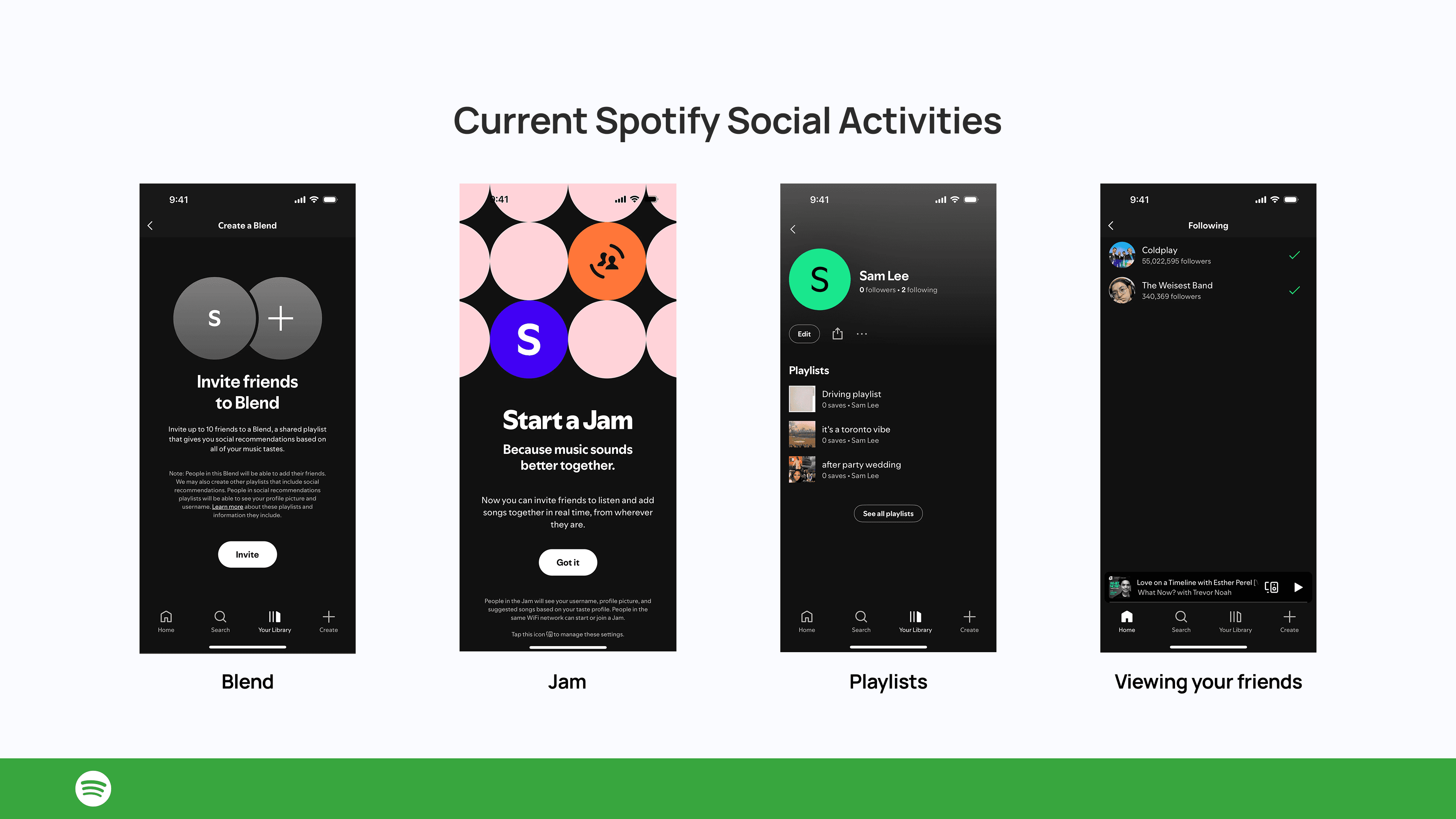
The goal was to redesign Spotify’s social experience to:
Enable users to easily share and discover music that their friends genuinely love.
Create an intimate, meaningful sharing experience that feels like giving a personal gift rather than posting a public status.
Design a mobile-friendly interface that makes the most of limited screen space.
Strengthen social connections through shared musical experiences.
Terms to note:
Friend Mix: A personalised view built from songs friends have recommended, offering a dynamic, friend-driven alternative to algorithm-based playlists.
Circles: A group feature for recommended songs and playlists, allowing users to share and discover music within trusted communities, such as close friends or lovers.
The Approach
Our approach focused on two key solutions: a refined system for sharing and recommending music, and a new way to access friends’ music preferences. This approach introduces a refined feature set that brings purposeful music sharing and discovery to the forefront.
Enhanced Sharing or recommending music system.
One problem we aimed to solve was the way social features feel disconnected from how real friendship and music sharing actually work.
How do we determine if a user truly loves a song? This was a key question we sought to answer.
A core assumption is that a user’s affinity for something can be measured by repeated engagement. In the context of music, this means a user who loves a song will listen to it frequently.
We defined ‘listening frequently’ as a user listening to a song more than five times in a week, and in supplementary case, actively liking the song.
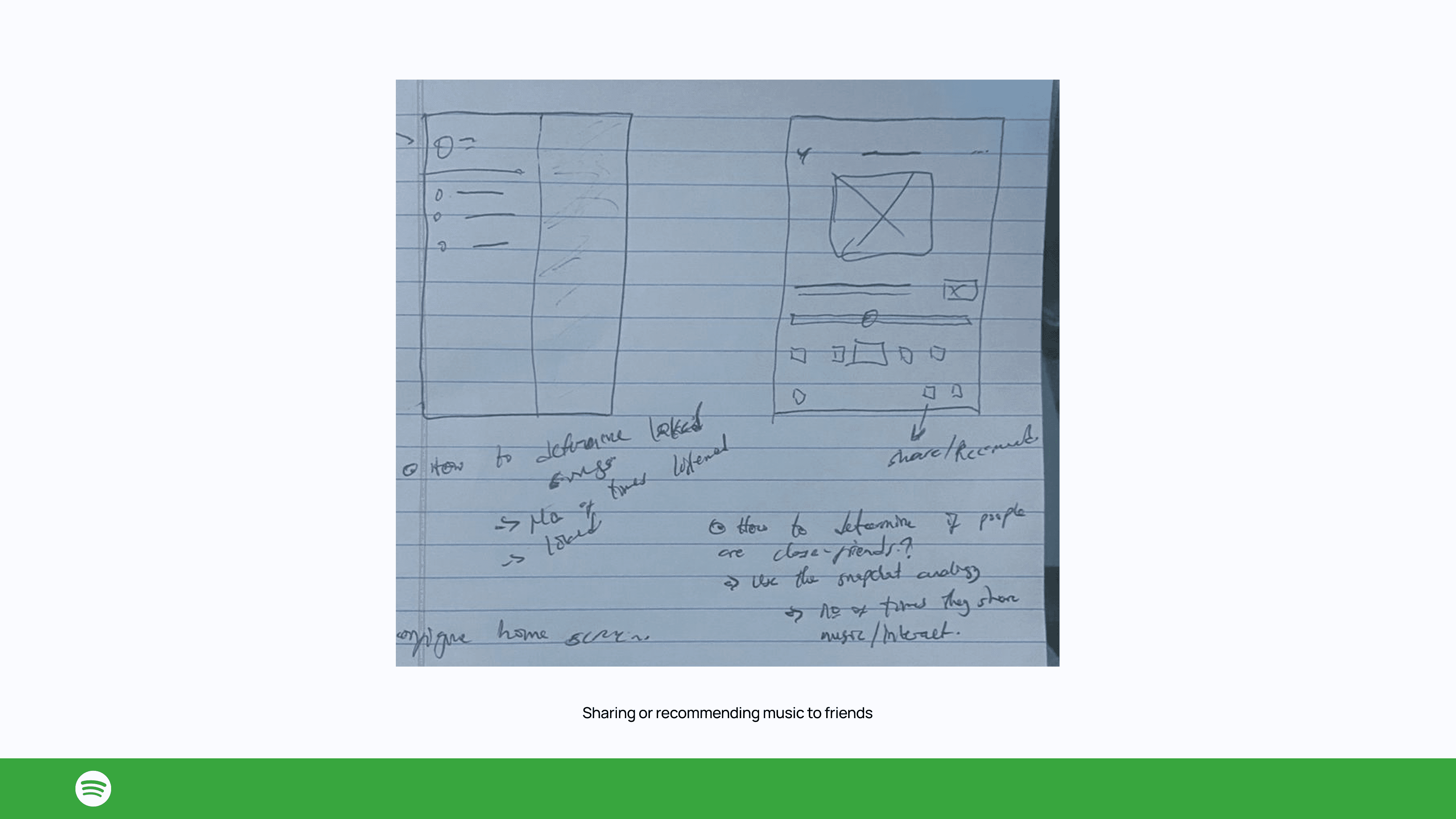
This data would help allow users to see their friends’ favourite songs on their profile, and these songs could then be used to generate personalised recommendations for their close friends, not also eliminating manual recommendations.
Furthermore, friends could be categorised as ‘close friends’ or ‘best friends’ based on the alignment of their musical interests and the frequency of their interactions or shared music.
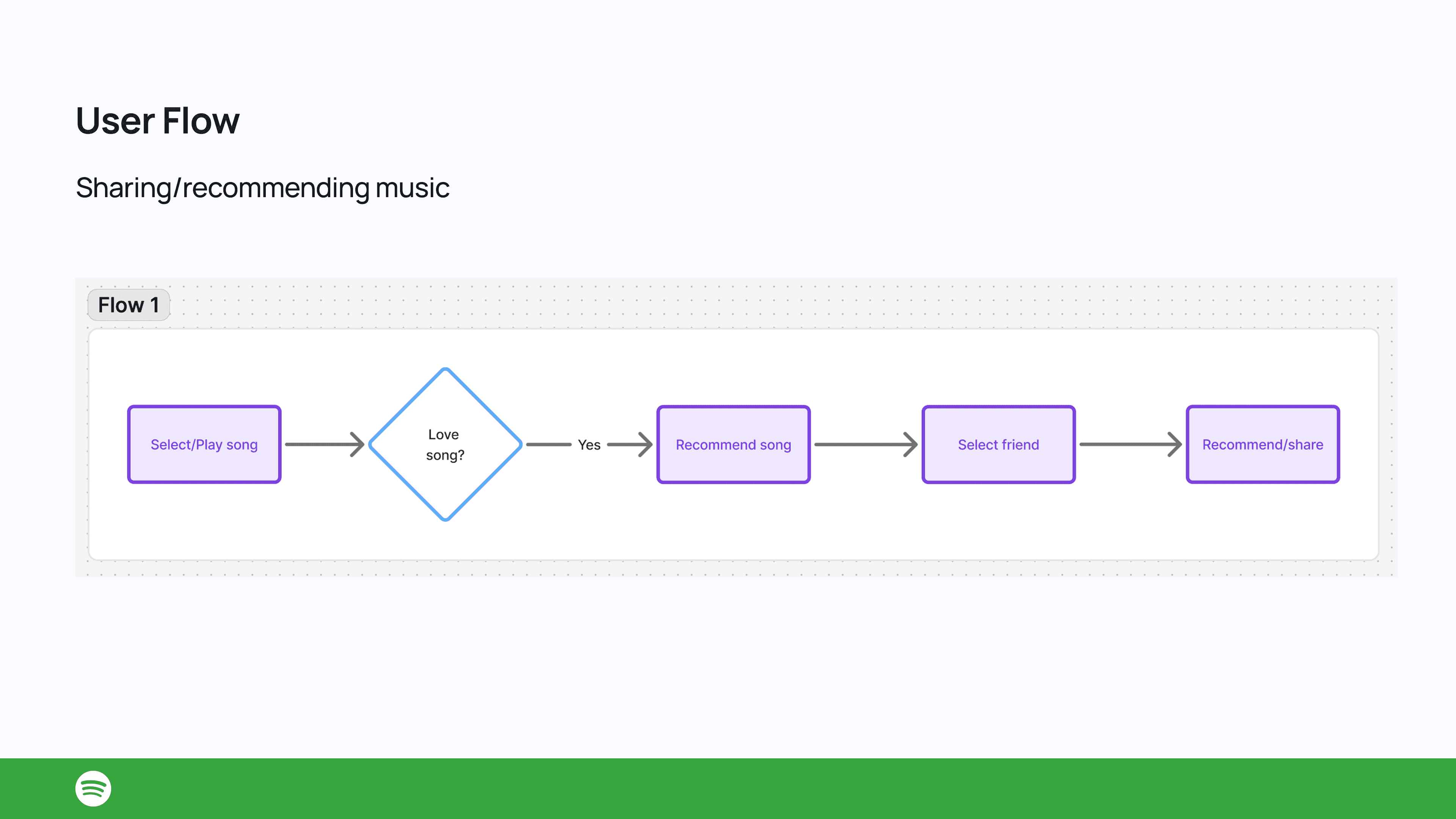
Sharing songs with friends should be effortless and genuine. This functionality should exist not only outside the app but also within Spotify itself. The redesigned flow is straightforward, users simply tap the recommend icon to share what they’re listening to with friends or circles.
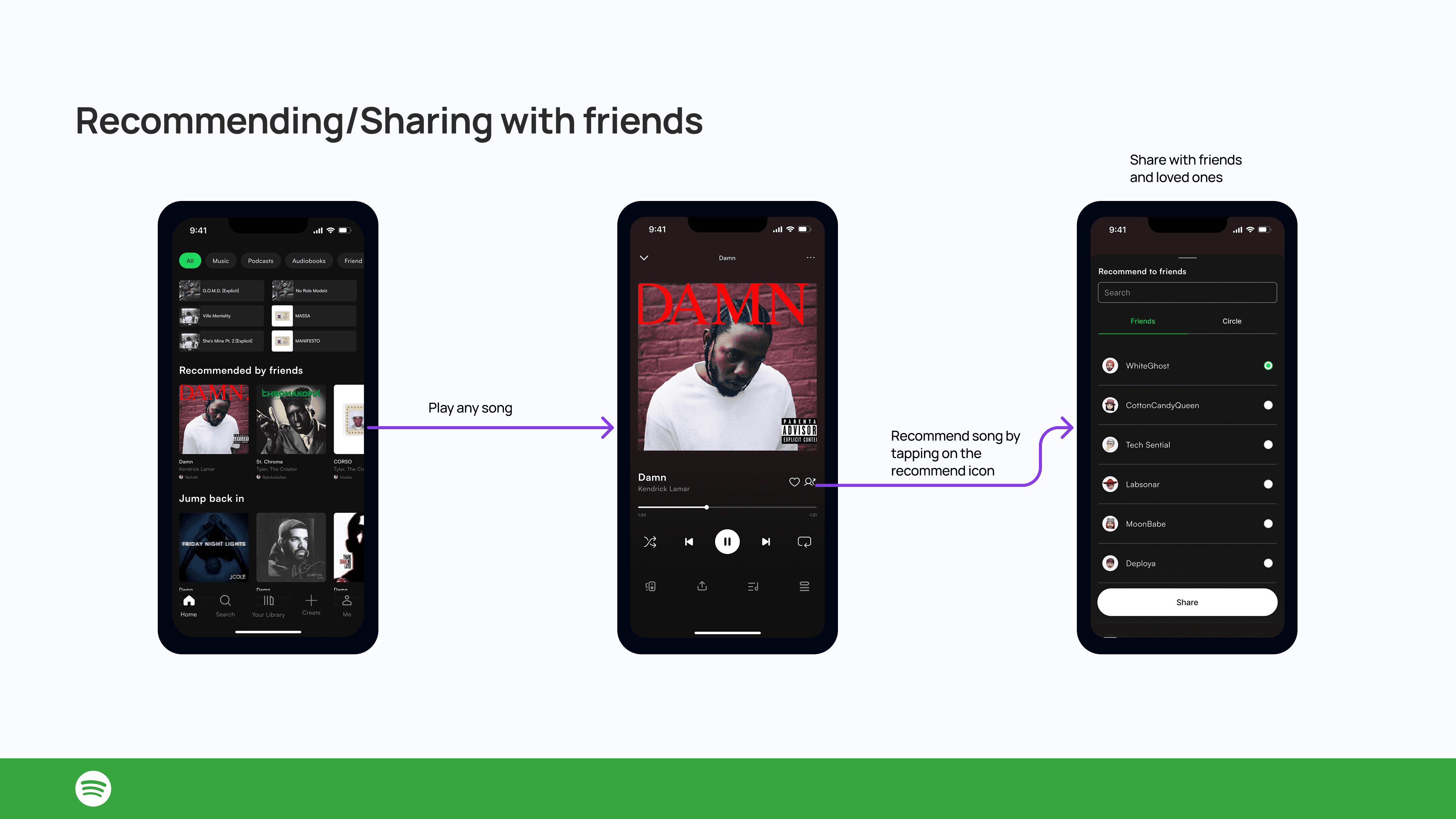
This way of sharing and recommending music enhances your listening activity with real genuine music that your close friends genuinely love and would recommend to you personally, and not some random activity or algorithmic recommendations.
Discovering recommendations.
Home Screen.
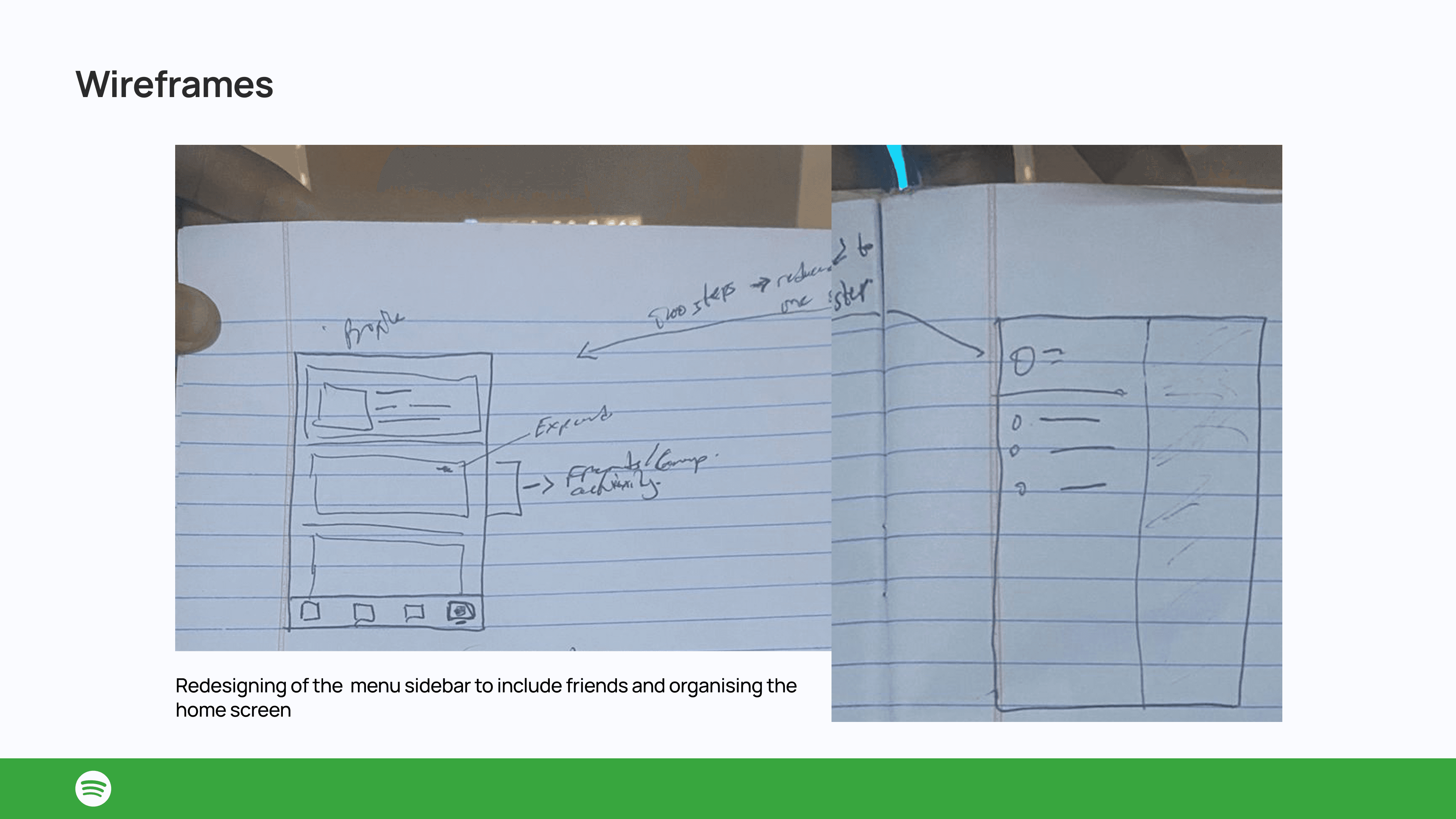
The existing home screen does not effectively showcase friend-driven recommendations. We redesigned the home navigation after research and brainstorming, by removing Spotify’s current side bar and adding the user profile icon to the bottom navigation icons.
One major reason was to make the user profile easily accessible and closer to the user. This way the time taken to access your profile as well as your friends profile is shorter.
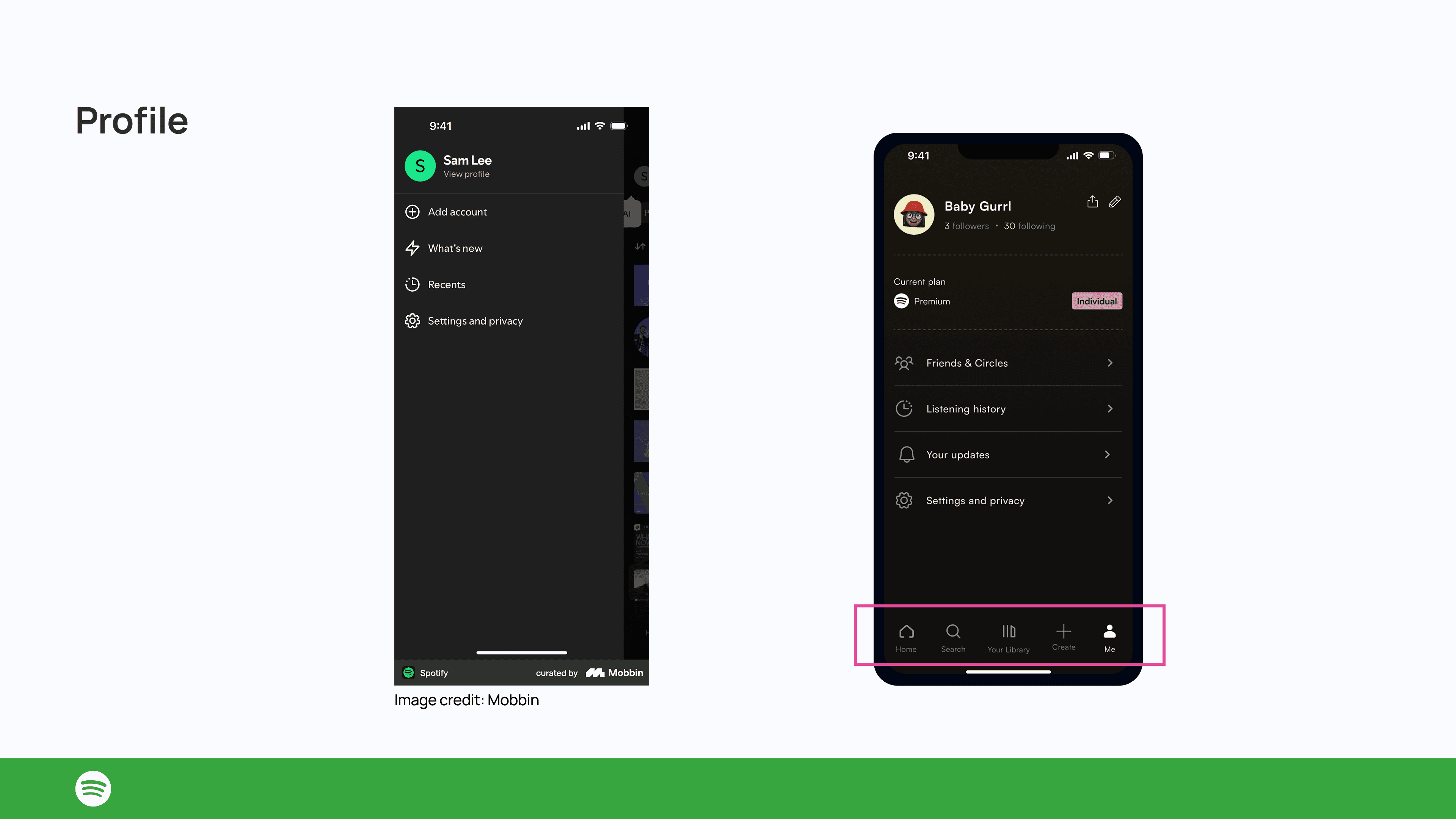
After brainstorming, we discovered a similar Spotify redesign by Juxtaposed, which affirmed our decisions. (https://youtu.be/suhEIUapSJQ?feature=shared&t=105)
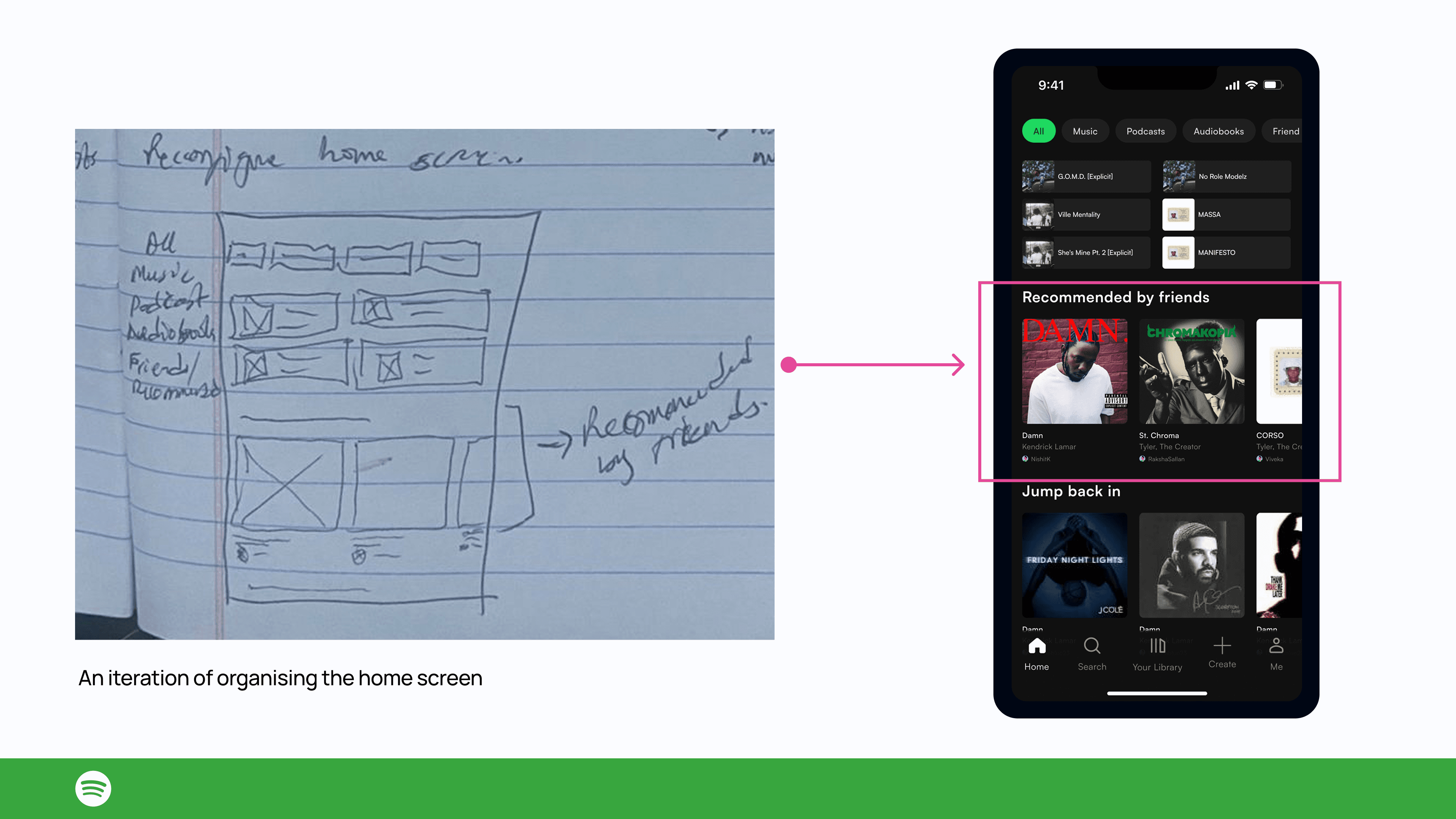
Also, we added a section on the home page for recommended songs from friends. This highlights just a few songs from your friends. This gives users an easy access and a preview to the recent music that has been shared with them.
A New Way to Socialise: Friends and Circles
Not only can you access music from your loved ones through the home page, but also, through your user profile. With the redesigned profile page, users can access their recommended songs and circles through their profile.
This introduces a unified way for users to find everything they need in one place, separating their genuine friends from the artists and podcasts they follow.
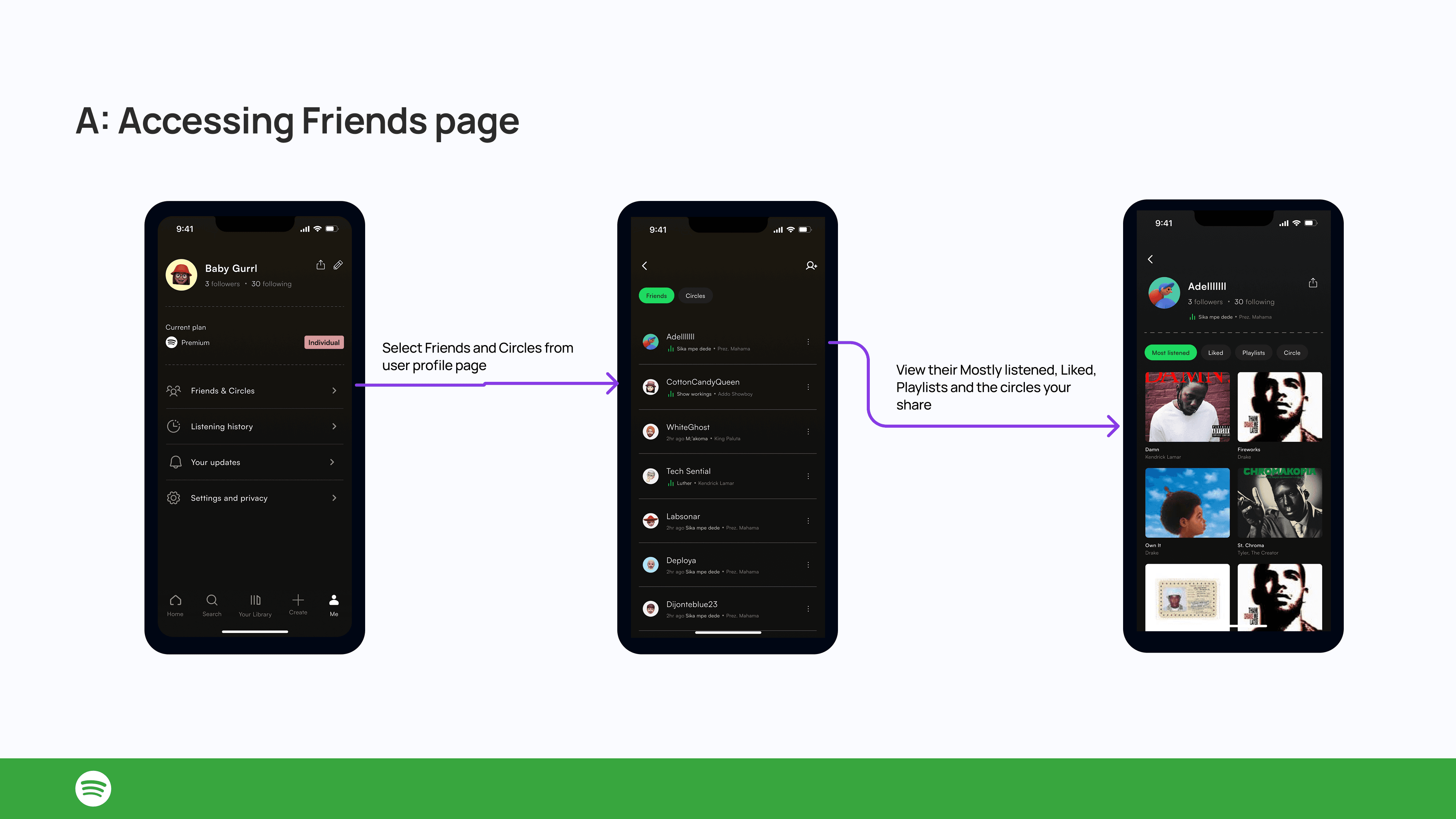
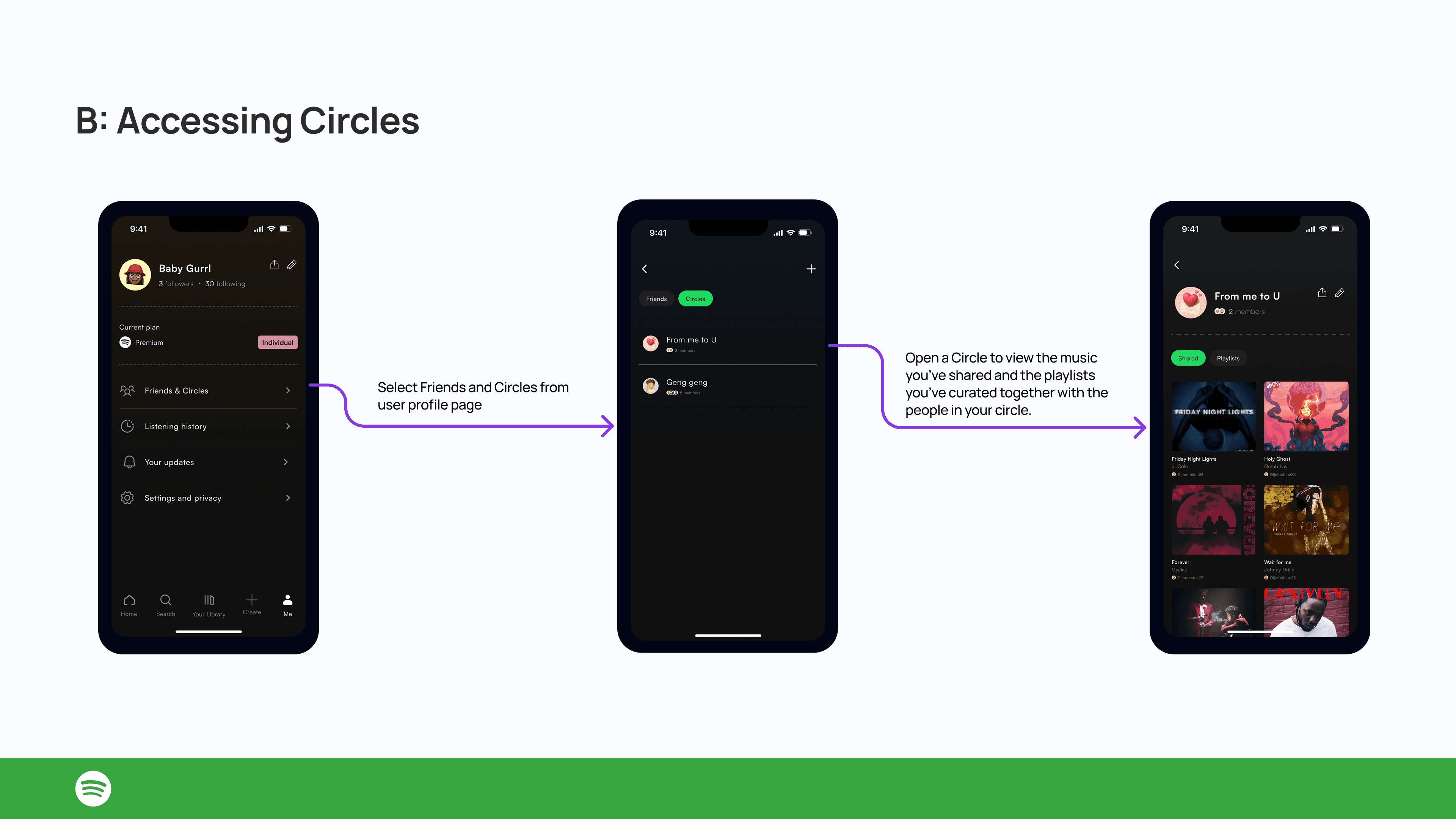
This feature is designed to reduce the friction of social music discovery, fostering deeper social connections and increasing user retention by making Spotify a central hub for social music interaction.
Privacy considerations
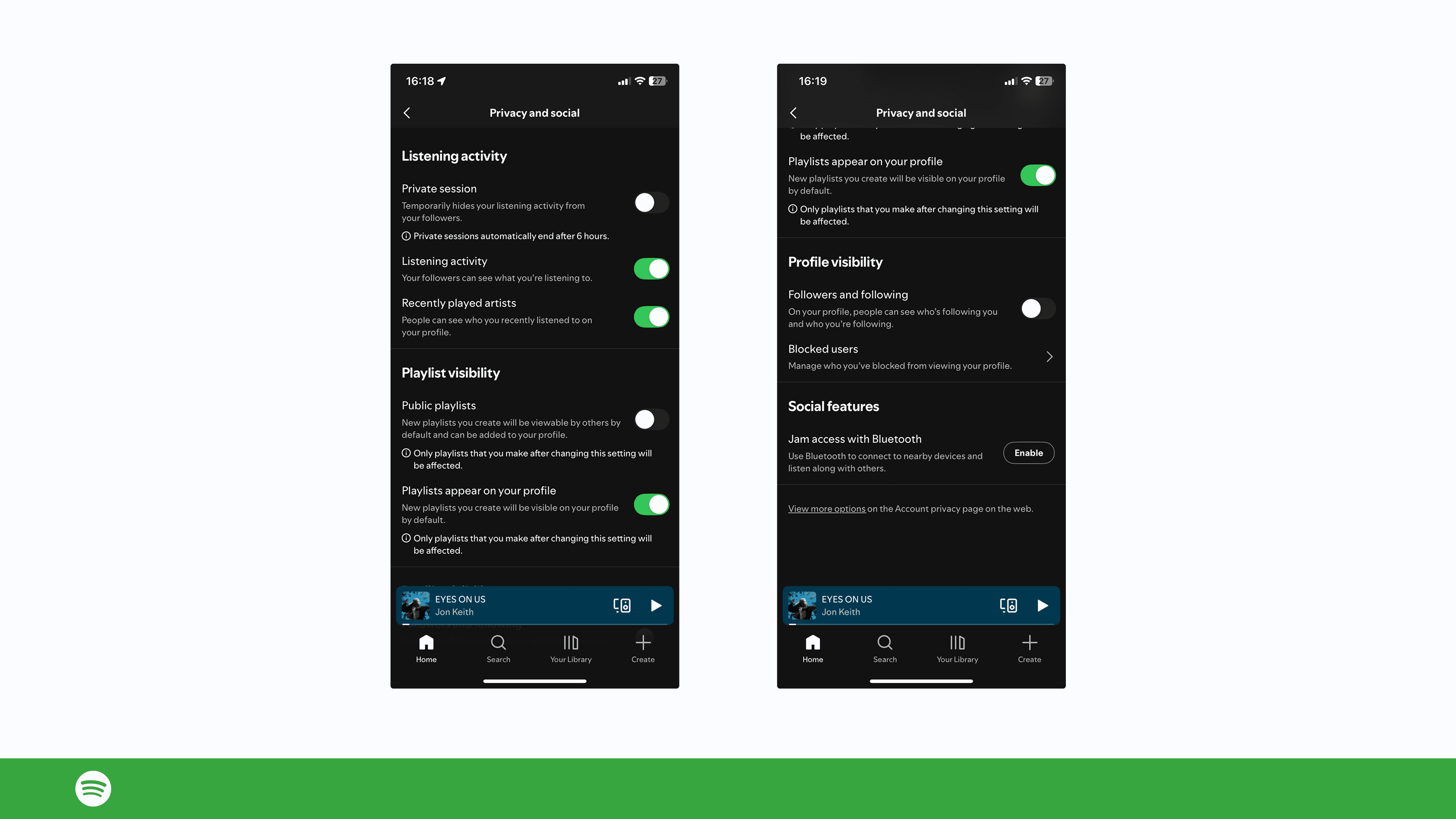
Our redesign accounts for Spotify’s updated privacy rules, ensuring that music-sharing features respect user preferences. Users must mutually enable adhere to Spotify’s privacy settings by enabling ‘Listening activity’ in the Privacy and Social settings to share activity, maintaining control while fostering trust in social interactions.
Conclusion
The redesign of Spotify’s social features addresses the core challenge of making music discovery more personal and friend-driven while bridging the gap between music and human connection. By reimagining how friends share, discover, and recommend songs, this redesign brings warmth, intentionality, and trust back into music discovery, without sacrificing privacy.